Why is “Claude Fever” More Than Just Another Tech Bubble?
The explosive growth of Claude Code marks a turning point where AI applications have officially moved from consumer entertainment tools to the core of enterprise productivity. When 6,500 tech decision-makers at the HumanX venue kept discussing the same product, it was no longer mere technical chatter but a clear signal of industry value chain restructuring. Anthropic publicly launched Claude Code in May 2025, and within less than a year, it reached an annualized revenue scale of $2.5 billion—a figure that is not only astonishing but also reveals the corporate market’s hunger for “AI tools that genuinely enhance efficiency.”
From an industry development cycle perspective, we are in the “second wave” of generative AI. The first wave, ignited by ChatGPT, focused on demonstrating technological possibilities and capturing public attention; the second wave is led by vertical applications like Claude Code, with the key being the creation of quantifiable business value. Glean CEO Arvind Jain’s statement that “this has become a religion” accurately depicts the pressure faced by enterprise technology decision-makers: when competitors start boosting development efficiency by over 30% through AI tools, not following suit means a loss of competitiveness.
More notably, this fever is not built on a house of cards. Based on interviews with 19 senior executives and investors at the conference, Claude Code’s advantages manifest in three aspects: stability in code generation quality (reducing subsequent modification time), seamless integration with existing enterprise workflows (lowering adoption resistance), and contextual understanding capability on large codebases (crucial for handling real enterprise projects). These traits elevate it from an “interesting experimental tool” to an “indispensable productivity asset.”
A Paradigm Shift in Enterprise AI Procurement
Traditional enterprise software procurement processes typically require months of evaluation, trial, and negotiation, but Claude Code’s diffusion path exhibits viral characteristics: spontaneous adoption by developers → internal team sharing of results → forced formal procurement by management. This “bottom-up” penetration model is rewriting the power structure of enterprise technology procurement. Technology decisions are no longer solely driven by the CIO’s office but are increasingly influenced by the actual needs of frontline engineers.
The table below compares the market positioning and key enterprise adoption metrics of mainstream AI programming tools:
| Tool Name | Launch Time | Core Advantage | Enterprise Adoption Rate (2026 Q1) | Annualized Revenue (Estimate) | Primary Customer Types |
|---|---|---|---|---|---|
| Claude Code | May 2025 | Code review quality, enterprise security architecture | 38% (Fortune 500) | $2.5 billion | Finance, healthcare, government agencies |
| GitHub Copilot | June 2021 | VS Code integration, open-source ecosystem | 52% (global enterprises) | $1.8 billion | Tech companies, startup teams |
| Cursor | November 2024 | On-premise deployment options, privacy protection | 22% (European enterprises) | $700 million | Privacy-sensitive industries, strictly regulated regions |
| Google Codey | January 2025 | Google Cloud integration, multilingual support | 15% (cloud-native enterprises) | $500 million | Organizations already using GCP |
As the table shows, while Claude Code still lags behind GitHub Copilot in overall adoption rate, its penetration among high-value customers (Fortune 500 enterprises) has reached 38%, with average contract value per customer far exceeding competitors. This reflects Anthropic’s strategic choice: not pursuing the largest user base, but the highest customer value.
mindmap
  root(Claude Code Success Factors)
    Technical Advantages
      Code generation accuracy rate >92%
      Context length up to 200K tokens
      Supports 30+ programming languages
    Business Strategy
      Early focus on enterprise market
      Pricing higher than consumer-grade products
      Direct sales team size 500+
    Ecosystem Integration
      Deep integration with mainstream IDEs
      Integration with enterprise identity management systems
      Seamless CI/CD pipeline integration
    Market Timing
      Significant increase in enterprise AI budgets
      Worsening developer shortage problem
      Escalating digital transformation pressure
Is OpenAI’s Moat Being Eroded?
OpenAI undoubtedly remains the most influential name in the generative AI field, but the gap between “influence” and “commercial success” is widening. ChatGPT’s global monthly active users still maintain an astonishing level of 1.8 billion, but when the conversation shifts to “which AI tool enterprises are willing to pay the highest premium for,” Claude Code begins to dominate. This is not a zero-sum game but a result of market segmentation and differentiated value positioning.
OpenAI’s challenge lies in its “general-purpose AI” positioning. When you try to serve everyone, it’s difficult to achieve excellence in any single vertical domain. Claude Code’s success precisely proves that in the enterprise programming market worth hundreds of billions of dollars annually, specialized tools can create more quantifiable return on investment than general-purpose chatbots. According to data revealed by investors at the conference, the average ROI time for enterprises on Claude Code is 4.2 months, compared to 7.8 months for ChatGPT Enterprise.
Philosophical Divergence in Technical Roadmaps
The deeper competition is actually a clash of technical philosophies. Anthropic has emphasized “explainable AI” and “alignment research” since its founding, which translates into important trust assets in the enterprise market. When code relates to the data security of millions of users or financial transactions worth billions of dollars, enterprises prefer tools that are “slightly conservative but predictable” over systems that are “powerful but behaviorally uncertain.”
OpenAI has recently invested heavily in GPT-5 development and expanding multimodal capabilities, which is technologically exciting but may seem “too futuristic” for enterprises urgently needing to solve today’s productivity problems. An anonymous tech company CTO bluntly stated at the HumanX venue: “We need tools that can boost our development team’s output by 20% tomorrow, not demos that might change the world next year.”
The table below illustrates the differences between the two companies in key strategic dimensions:
| Strategic Dimension | OpenAI | Anthropic |
|---|---|---|
| Core Positioning | General artificial intelligence platform | Enterprise-grade AI solutions |
| Technical Focus | Model scale expansion, multimodal fusion | Reasoning capability optimization, security enhancement |
| Market Strategy | Consumer-grade proliferation → enterprise penetration | Enterprise deep cultivation → ecosystem expansion |
| Revenue Structure | API revenue primary (~60%), subscription model | Enterprise licensing primary (~75%), project services |
| R&D Investment Allocation | Foundational model research 50%, application development 30%, safety alignment 20% | Vertical application development 40%, enterprise integration 30%, foundational model 20%, safety 10% |
| Customer Acquisition Cost | Relatively low (brand effect) | Relatively high (direct sales) |
| Customer Lifetime Value | Medium (high consumer conversion rate) | Very high (long enterprise contract periods) |
This differentiated competition is healthy for the entire industry. It forces all participants to clarify their value propositions rather than falling into mere specification races. More importantly, it provides enterprise customers with genuine choice—selecting the most suitable technology partner based on their own needs, budget, and risk tolerance.
How is the “Invisible Champion” Strategy of Chinese Open-Source Models Changing the Game?
While Western media focuses on the Anthropic vs. OpenAI showdown, another hot topic at the HumanX exhibition was the leading position of Chinese teams in open-source weight models. This is not a traditional “Made in China” story but a new model of technology diffusion: by open-sourcing high-quality pre-trained weights, Chinese research teams are shaping the tool choices of global AI developers.
Multiple CTOs at the conference pointed out that Chinese open-source models (such as the Qwen, ChatGLM, Yi series) have reached or even surpassed closed-source models of comparable scale in specific benchmark tests, with the biggest advantage being “completely free” and “self-fine-tunable.” For startups, academic institutions, or individual developers with limited budgets, this provides a direct path to bypass commercial licensing restrictions.
The Business Logic Behind the Open-Source Strategy
The open-source strategy of Chinese tech companies has clear business logic: sacrifice short-term licensing revenue in exchange for ecosystem influence and long-term standard-setting power. When millions of developers build applications based on your open-source model, you gain dominance over data flow, best practices, and talent cultivation. This strategy has proven effective in mobile operating systems (Android), databases (MySQL), and cloud-native technologies (Kubernetes).
More importantly, open-source models lower the entry barrier for AI applications, potentially accelerating global AI adoption. According to GitHub statistics, in Q4 2025, projects based on Chinese open-source models grew by 320% year-over-year, with 68% of developers using these models located outside China. This “technology export” model is fundamentally different from traditional product or service exports.
timeline
    title Development Milestones of Chinese Open-Source AI Models
    section 2023
        August 2023 : Tongyi Qianwen open-sources 7B parameter model
        November 2023 : ChatGLM3 open-sourced<br>Supports long context
    section 2024
        March 2024 : DeepSeek releases Yi series<br>Outstanding multilingual capabilities
        July 2024 : Open-source model downloads on Hugging Face<br>Exceed 10 million
    section 2025
        January 2025 : Qwen2.5 series released<br>Performance rivals GPT-4
        September 2025 : Enterprise adoption rate of open-source models<br>Reaches 15%
    section 2026
        Q1 2026 : HumanX Conference becomes<br>showcase platform for open-source models
        Present 2026 : Open-source and closed-source models<br>enter coexistence and competition phase
However, the open-source strategy also faces challenges. The biggest issue is “sustainability”—who will pay the enormous costs of continuously training larger models? Currently, Chinese open-source models mainly rely on strategic investments from tech companies, but such support may weaken during economic downturns or corporate strategy shifts. Additionally, open-source models still struggle to compete with commercial products in enterprise-level support, security updates, and compliance certifications.
Technology Supply Chains in Geopolitical Contexts
Discussions at the HumanX venue also touched on sensitive geopolitical issues. The controversy over Anthropic’s contract with the U.S. Department of Defense (though courts temporarily allow cooperation with other federal agencies) reminded all attendees that AI technology has become a core element of national competitiveness. When technology choices may influence future geopolitical landscapes, enterprise procurement decisions are no longer purely commercial considerations.
In this environment, open-source models offer a “de-risking” option. Enterprises can build internal proprietary models based on open-source foundations, reducing dependence on a single supplier or country. A technology executive from a European financial institution revealed they are simultaneously evaluating Claude Code, self-built solutions based on open-source models, and local vendor solutions, aiming to establish a “multi-vendor strategy” to diversify risk.
The Next Wave of Enterprise AI Deployment: From Tool Procurement to Process Reshaping
The true significance of Claude Fever lies not in the success of a single product but in marking a new stage in enterprise perception of AI. Initially, enterprises viewed AI as an “add-on feature” or “experimental project”; now they are beginning to see it as a “core productivity engine.” This cognitive shift will trigger a series of organizational changes, process reengineering, and skill redefinition.
According to survey data from the HumanX venue, among enterprises that have deployed AI programming tools:
- 73% report development cycles shortened by over 20%
- 68% indicate code review time reduced by 35%
- 52% observe narrowing productivity gaps between senior and junior engineers
- But only 29% have systematically redesigned software development processes
This last figure reveals the greatest opportunity and challenge. Most enterprises remain in the stage of “using AI to accelerate old processes” rather than “redesigning new processes for AI.” The true value explosion will occur when enterprises begin restructuring entire workflows—from requirements analysis and system design to testing and deployment—to fully leverage AI potential.
Transformation Pressure on Talent Structures
The proliferation of AI tools is changing talent demands in software teams. The value of traditional “typing programmers” is declining, while demand for “architecture designers,” “prompt engineers,” and “AI workflow designers” is surging. Enterprises face dual pressures: on one hand, they need to train existing teams in new skills; on the other, they must recruit new talent with AI-oriented thinking.
More subtly, AI tools may exacerbate the “center-periphery” differentiation in global software development. If Silicon Valley teams can boost productivity by 50% through AI tools, the advantage of low-cost regions may be diminished. This will force global enterprises to reassess outsourcing strategies, team distribution, and collaboration models.
The table below predicts the impact of AI tool proliferation on software job roles:
| Job Role | 2026 Demand Change | Core Skill Shift | Salary Trend |
|---|---|---|---|
| Junior Backend Engineer | -15% (decrease) | From syntax memorization to logic design | Flat or slight decrease |
| Senior System Architect | +25% (increase) | Adding AI workflow design capability | Increase 10-15% |
| Test Engineer | -20% (decrease) | Shifting to AI test case generation and analysis | Polarized (basic testing down, AI testing up) |
| Prompt Engineer | +180% (surge) | Domain knowledge + AI interaction skills | Increase 20-30% |
| Developer Experience Designer | +40% (increase) | AI tool integration and team training | Increase 10-20% |
| Technical Project Manager | +10% (slight increase) | AI progress prediction and risk identification | Flat |
This transformation will not be smooth. Multiple senior executives at the HumanX venue mentioned that the greatest resistance often comes from middle management—they worry about power shifts from team restructuring and lack the knowledge and confidence to lead AI transformation. Successful enterprises will be those that can synchronize “technology deployment” with “organizational change.”
Investment Perspective: How Will Value Be Redistributed in the AI Industry?
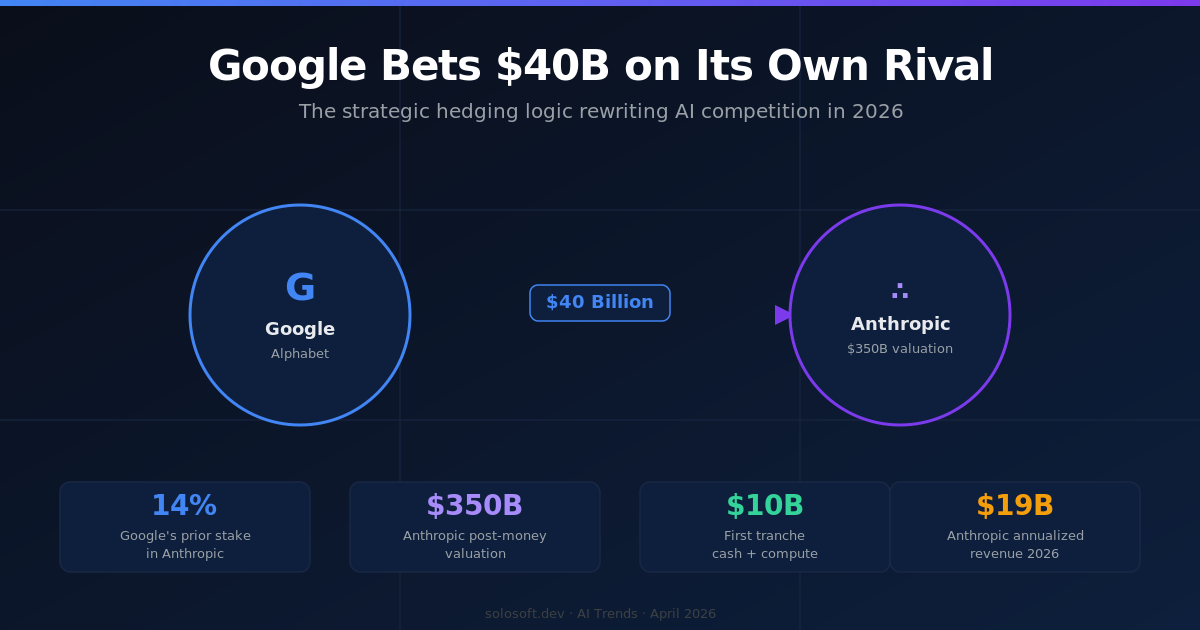
From a capital market viewpoint, Claude Fever reveals a repricing of the AI value chain. Over the past three years, investors largely focused on foundational model developers, but now increasing capital is flowing toward “killer applications” and “enterprise integration layers.” While Anthropic’s $380 billion valuation is astonishing, more noteworthy is the change in its valuation structure: shifting from “research potential valuation” to “revenue multiple valuation.”
Investors at the conference shared several key data points:
- The total addressable market (TAM) for AI programming tools reached $42 billion in 2026, projected to exceed $80 billion by 2028.
- The average proportion of enterprise spending on AI tools in IT budgets rose from 3.2% in 2024 to 8.7% in 2026.
- Venture capital investment in the AI application layer surpassed the foundational model layer for the first time in Q4 2025.
This shift reflects a maturation of investment logic: from