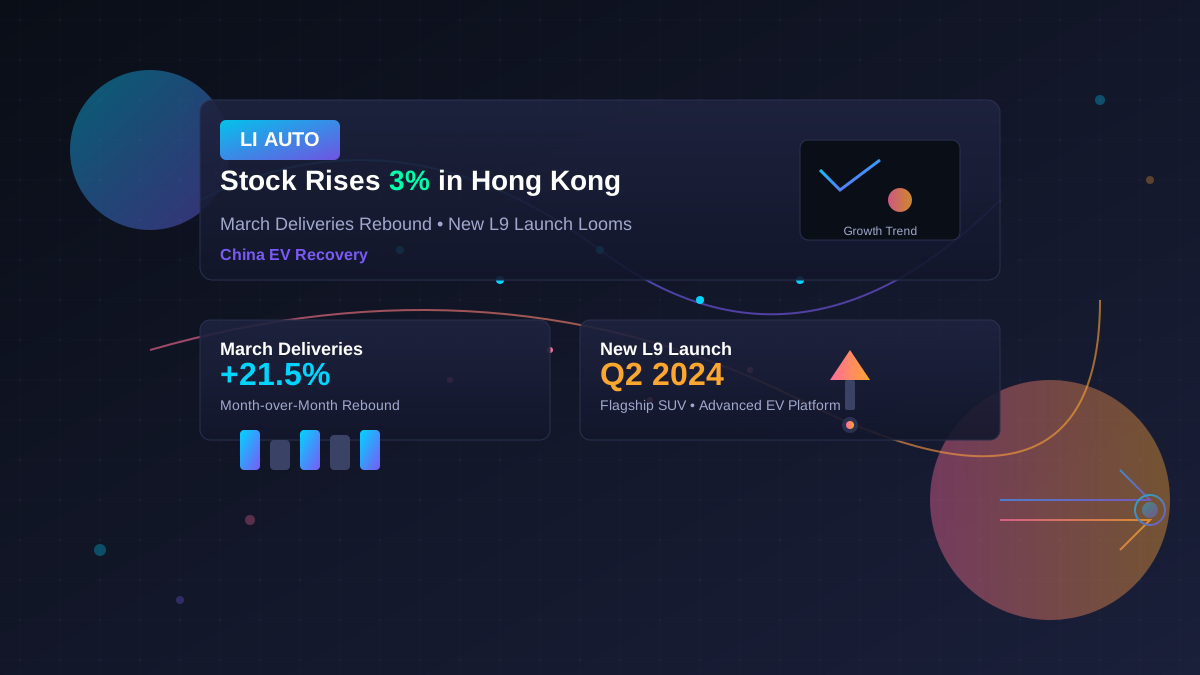
Li Auto’s stock price rose 3% in Hong Kong trading on April 10, 2026, driven by a significant rebound in March delivery figures and the imminent launch of the facelifted L9 model. This movement is not merely a short-term stock fluctuation but a clear signal that China’s electric vehicle market is undergoing a profound transformation—shifting from the brutal price wars of the past two years to a new phase of competition centered on artificial intelligence (AI) and intelligent capabilities.
According to the latest data released by the company, Li Auto delivered 38,164 vehicles in March, a 39.2% increase month-on-month. This rebound was primarily fueled by the resolution of production bottlenecks for the pure electric SUV model i6, which saw monthly deliveries exceed 24,000 units. Simultaneously, the company actively adjusted its sales strategy to clear inventory for the upcoming L9 facelift, further boosting overall delivery numbers. This dual-driven growth has restored market confidence, with analysts pointing out that Li Auto’s performance indicates the entire Chinese EV industry is gradually emerging from the ‘volume at all costs’ phase and beginning to focus on profitability and technological differentiation.
The upcoming launch of the new L9 is seen as a crucial test for Li Auto’s technological capabilities. The facelifted model will be equipped with the company’s self-developed M100 chip, with some high-end configurations offering computing power up to 2560 TOPS—a significant leap that provides a solid hardware foundation for higher-level autonomous driving. Additionally, the new L9 features a larger battery pack, enabling a pure electric range of over 400 kilometers, along with comprehensively upgraded chassis tuning and a next-generation smart cockpit system. These upgrades clearly target the high-end family user segment, aiming to solidify Li Auto’s position in the premium market.
Behind these product moves lies Li Auto’s strategic layout. The company’s recently announced ‘3+2’ strategy explicitly focuses on three core business areas: reforming the retail network, successfully launching the new generation L9, and accelerating pure electric vehicle sales. These are supported by two technological pillars: AI-driven autonomous driving and intelligent user experience. This strategy reveals that Li Auto is no longer content with being just a ‘range-extender expert’ but is actively transforming into a technology-driven intelligent electric vehicle company.
From an industry perspective, Li Auto’s movements reflect a broader trend in China’s EV market. After years of fierce competition centered on battery range and pricing, major players are now shifting their focus to AI, high-performance chips, software-defined vehicles, and full-scenario intelligent experiences. This transition means that future competition will no longer be solely about who can produce the cheapest cars but about who can offer smarter, more personalized mobility solutions. In this new race, companies with strong R&D capabilities in software and algorithms will have a clear advantage.
However, challenges remain. As competition intensifies in the intelligentization arena, R&D costs will continue to rise, testing companies’ profitability. Additionally, how to effectively integrate AI technology with actual user needs, avoiding the trap of ’technology for technology’s sake,’ will be a critical issue for all players. Li Auto’s performance in the coming quarters, especially the market reception of the new L9 and the progress of its pure electric vehicle lineup, will be key indicators to watch.
In summary, Li Auto’s stock rebound and the L9 facelift launch are not isolated events but important markers in the evolution of China’s electric vehicle industry. They signify that the market is entering a new stage where intelligence and user experience become core competitive factors. For investors and industry observers, understanding this shift is crucial for grasping future trends in the Chinese EV sector.